Online Mastering | Analogue Mastering by Dynamic Mastering Services
  • Home
  • Online Mastering Services
    • FAQ
  • Mastering Engineer
  • Get Started
    • Examples >
      • Videos
  • Prices
  • Testimonials
  • Contact
  • Mastering Blog

16bit vs 24bit

17/7/2025

0 Comments

 
Picture

16bit vs 24bit

A brief outline of the differences between 16bit and 24bit digital audio in mixing and mastering scenarios.
Written by David Mackie Scouller at Dynamic Mastering Services
Dynamic Range

​Dynamic range is the difference between the loudest possible signal and lowest possible signal before the noise floor is reached.

Digital

16bit = 96dB dynamic range (65,536 possible amplitude levels).
24bit =144dB dynamic range (16,777,216 possible amplitude levels).

Note the correlation between dynamic range and possible amplitude levels.
 
The dynamic range of 16bit is more than adequate for any music genre.

Analogue

Vinyl =  70dB dynamic range.
Reel To Reel Tape = 60dB dynamic range.
Cassette = 50dB to 56dB dynamic range with Metal IV giving the largest dynamic range.
 
In a normal room most people consider 60dB to be silence.

Mixing Stage

Working at 16bit or 24bit the loudest signal peak can not go beyond 0dBFS (zero decibel Full Scale).
 
When at the recording/mixing stage it is best to work at 24bit with plenty of headroom.
 
24bit allows for there to be no concern over a large headroom due to the 144dB of dynamic range.
 
Headroom is the difference in dB from the loudest signal peak and reaching the maximum limit of 0dBFS.
 
When submitting a recording/mix for mastering it is best practice for the recording/mix to have some headroom therefore it is also best practice for the recording/mix to be 24bit.

Mastering Stage

To create a 16bit master from a 24bit recording/mix the least significant 8 bits are removed which can lead to truncation distortion.
 
Truncation is the name given to the process of removing the least significant 8bits.
 
Before the truncation process dither can be applied to eliminate truncation distortion.
 
Dither is a very low level shaped noise which eliminates the distortion caused by bit reduction.
 
Vinyl pre-masters used for making the cut to vinyl ideally require headroom so are therefore delivered at 24bit.

Conclusion

​There is no advantage to having a 24bit master vs a properly dithered 16bit master.
 
The Red Book standard for CD is 16bit and was created as a protocol to deliver high quality digital audio.

Masters that are 24bit are not a widely accepted for distribution with some services refusing to accept them.
 
16bit masters are still the most compatible format today.
 
16bit vs 24bit. A brief outline of the differences between 16bit and 24bit digital audio in mixing and mastering scenarios.
0 Comments

How To Get A Barcode For Your CD

7/6/2017

5 Comments

 
Written by David Mackie Scouller at Dynamic Mastering Services
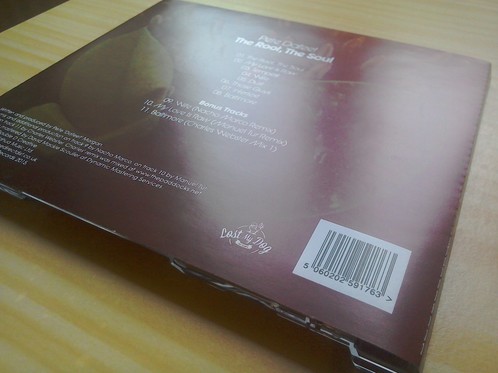
How To Get A Barcode For Your CD - Pete Dafeet - The Root, The Soul
How To Get A Barcode - Lost My Dog Records - Pete Dafeet - The Root, The Soul (Back Cover)

Do I need a Barcode to sell my CD?

I’m often asked by my clients whether they need a barcode to sell their CD in shops. The simple answer is yes. I have many clients that just wish to sell their CDs at gigs so in that case a barcode would not be needed.

What is an EAN barcode?

An EAN barcode (European Article Number) is used to represent and track your CD as an entire physical product compared to an ISRC code which represents individual tracks or sound recordings. 

Everything you need to know about ISRC codes.

Read More
5 Comments

Audio Mixing: Quick Tips For Mixing Kick Drums

16/3/2017

0 Comments

 
Written by David Mackie Scouller at Dynamic Mastering Services
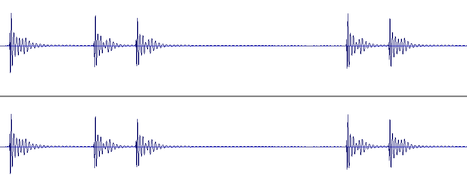
Kick Drum Waveform - Audio Mastering
I had a client recently that was struggling to get the kick drum to punch through a dense mix. I gave some quick advice in an email which I thought I'd share here.

When mixing a kick drum into a piece of music ​it’s not just a case of having enough top end on the kick drum to make it cut through the mid range of the mix it’s best to make space for it in the mix by having less sounds playing at the same time as the kick drum. Another way to make space for the kick drum is by reducing the frequencies in other instruments that clash with the same frequencies that the kick drum occupies especially in the bass and sub bass area of a mix if you want a nice thump to cut through.


Read More
0 Comments

    Author

    David Mackie Scouller. Mastering Engineer at Dynamic Mastering Services.

    Archives

    July 2025
    November 2018
    November 2017
    October 2017
    September 2017
    August 2017
    July 2017
    June 2017
    May 2017
    April 2017
    March 2017
    February 2017
    January 2017
    December 2016
    November 2016
    October 2016
    April 2016
    February 2016
    December 2014
    November 2014
    July 2014
    May 2014
    April 2014

    Categories

    All
    Audio Mastering
    Audio Mixing
    Lost My Dog Records
    New Equipment
    News
    Restoration
    Testimonials
    Tips & Tricks
    Videos

    RSS Feed

    View my profile on LinkedIn

Site Links

Online Mastering Services
Mastering Engineer
Mastering Services FAQ
Audio Mastering Get Started
Online Mastering Prices
Online Mastering Examples
Online Mastering Videos 
Dynamic Mastering Services Testimonials
​Dynamic Mastering Services Client Feedback
Dynamic Mastering Services Clients
Contact Dynamic Mastering Services
​Audio Mastering Tips & Tricks
​
Copyright © 2010 - 2026 Dynamic Mastering Services. All Rights Reserved.
Contact
Proudly powered by Weebly
  • Home
  • Online Mastering Services
    • FAQ
  • Mastering Engineer
  • Get Started
    • Examples >
      • Videos
  • Prices
  • Testimonials
  • Contact
  • Mastering Blog